

Local Column
COLUMN
Where Can You See Coconut Crabs on Miyako Island? Best Times, Night Tours, and Conservation Rules
Hello everyone!
One of the largest activity stores in Miyako Island
Miyako Island ADVENTURE PiPiIt is!
I’m sure many of you are wondering, “I’d like to see coconut crabs on Miyako Island” or “Where can I find them?”
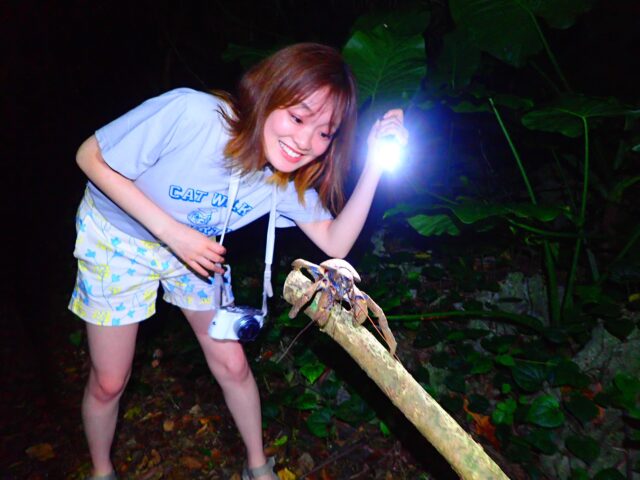
Since coconut crabs are nocturnal creatures,The trick to spotting them is to take a flashlight and search the woods or areas near the coast at night.It is.
In this article, we’ll introduce the characteristics of Miyako Island’s coconut crabs, where and when to see them, rules to follow, how to spot them on night tours, and precautions to take when eating coconut crab dishes.
Table of Contents
What Are the Coconut Crabs of Miyako Island?

The coconut crab is a relative of the hermit crab and is one of the world’s largest land-dwelling crustaceans.
Known as “Makugan” in the local dialect of Miyako Island, it has long been a familiar creature to the island’s residents.
On the other hand, their numbers are declining, andListed as Endangered Category II on the Ministry of the Environment's Red ListIt has been selected.
One of the largest species of hermit crabs that live on land

Coconut crabs spend the first part of their lives in the ocean, and when they are small, they carry shells on their backs, just like hermit crabs.
As they grow, they no longer carry their shells on their backs, andIts appearance, with a hard shell and large clawsThe result will be changed to
Large specimens can grow to about 40 cm in length, and it is said that they can live for about 50 years.
Omnivorous creatures that are active at night
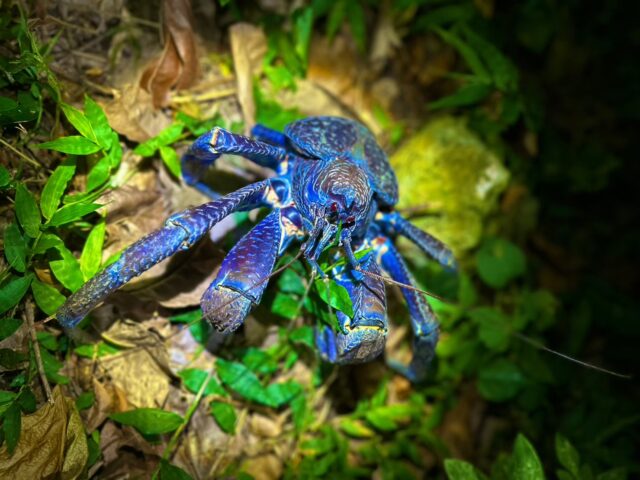
During the day, hermit crabs hide in crevices in rocks or holes at the base of trees, and once it gets dark, they wander around in search of food.
Although its name includes the word “palm,” it is not an omnivore that eats only palm fruits; it eats everything from fruits and fallen leaves to the carcasses of other animals.
Since I have a pair of strong scissors,Even if you find one, don't reach out or touch it.Make sure to do so.
Rules for Protecting the Coconut Crabs of Miyako Island

Miyakojima City has an ordinance to protect coconut crabs, andThere are detailed regulations regarding the permitted times, sizes, and locations for catching them.The following is a list of the most common problems with the "C" in the "C" column.
In particular, the four districts of Ikema, Manatsu, Nanamata, and Kurima have been designated as protected areas, and fishing is prohibited within these areas throughout the year.
It's fine to just look at them while sightseeing, but please don't catch them or take them home.
| Item | Contents |
| Protected Area (Prohibited year-round) |
Ikemma District (the northern coast of Ikemma Island) Mana District (the coastline west of Hirara-Karimata) Shichimata District (the coastline from the base of Higashi-Henza-zaki to the south side near Imugya) Kurima District (the southeastern coast of Kurima Island: Kurima Fishing Port to Nagasaki Beach) |
| Outside the protected area Prohibited Fishing Period |
June 1–August 31 (spawning and breeding season) |
| Outside the protected area Individuals Prohibited from Capture |
Individuals with a carapace length of less than 8 cm or 12 cm or more, and females carrying eggs |
| Penalties | A fine of 100,000 yen or less |
The contents of the ordinance can be found on the official Miyakojima City website, “Conservation of Coconut Crabs"This summary is based on the following."
You can check the detailed boundaries of the protected area on the map of the protected area on the official website.
Even when observing,Do not shine a light on them for too long; do not destroy their burrows; if they come out onto the road, watch out for cars.Keep in mind that the
Where and When to See Coconut Crabs on Miyako Island

Coconut crabs are,Forests near the coast and areas where plants such as adan trees grow denselyI live in [...].
Here, we’ll introduce five spots that are often recommended as great places to see coconut crabs.
The attractions located within the protected area are,Observation Only—No Capturing AllowedIt is.
However, since it’s dark underfoot in the woods at night, it can be dangerous for inexperienced people to walk alone, so it’s safer to search with a guide.
Times, Weather, and Seasons When It's Easy to Find

If you're looking for hermit crabs,The evening hours after darkThat's the basic principle.
It is said that many coconut crabs emerge from their hiding places after it rains or on humid nights.
Since June through August is their breeding season, if you happen to spot them, please just observe them quietly.
The Area Around Yuzumi Beach

Boraga Beach is located in the southeastern part of Miyako Island, near Higashi-Hennazaki.
There are many adan trees in the area, which serve as food for coconut crabs, so this spot is sometimes recommended as a place to see them.
The southern coastline extending westward from the base of Higashi-Hezanazaki is a protected area (Nanamata District), so,Observation Only—No Capturing AllowedIt is.
There are few streetlights at night, so please watch your step carefully even if you're visiting by car.
| address (e.g. of house) | 1139-1 Jobe Yora, Miyakojima City, Okinawa, Japan |
| Access | Approximately 30 minutes by car from Miyako Airport |
The Area Around Sunayama Beach

Sunayama Beach is a popular beach where a white sandy shore and a rock arch stretch out beyond the sand dunes.
The path from the parking lot to the beach is lined with trees, and coconut crabs are sometimes spotted there at night.
The sandy path can be difficult to walk on at night, so be sure to bring a flashlight and check the route while it's still light out.
| address (e.g. of house) | Hirara Kakawatori, Miyakojima City, Okinawa, Japan |
| Access | Approximately 20 minutes by car from Miyako Airport |
The Area Around Shinshiro Beach

Aragusuku Beach, located on the east side of Miyako Island, is a popular spot for snorkeling.
The area around the coast is lined with woods and rocky outcrops, and some people have reported seeing hermit crabs there at night.
Although this area is outside the protected zone, please observe the June–August fishing ban and size limits, and limit yourself to just watching.
| address (e.g. of house) | Shinjo, Shirobe, Miyakojima City, Okinawa Prefecture |
| Access | Approximately 30 minutes by car from Miyako Airport |
Area Around Manatsu Beach (Protected Area)

Manatsu Beach is a small beach surrounded by rocky outcrops located in the northwestern part of Miyako Island, west of Hirara-Karimata.
The coastline in this area has been designated as a protected zone (the Manatsu District), andObservation Only—No Trapping All Year RoundIt is.
Since the path is narrow and the terrain is rough in some places, if you plan to go at night, be sure to check the route while it’s still light out.
| address (e.g. of house) | Hirara Karimata, Miyakojima City, Okinawa, Japan |
| Notes | Coastal Crab Conservation Area (Mana-tsu District). Observation only; capture prohibited year-round. |
Nagasaki Beach Area (Kurama Island, Protected Area)

Nagasaki Beach is located at the southern tip of Kurima Island, which can be reached via the Kurima Bridge.
The southeastern coastline from Kurima Fishing Port to Nagasaki Beach is a protected area (Kurima District), andObservation Only—No Trapping All Year RoundIt is.
Since Kurima Island has been designated by the local community as the “Island of Coconut Crabs and Sea Turtles,” please observe the wildlife quietly and respectfully.
| address (e.g. of house) | Shimoji Raima, Miyakojima City, Okinawa, Japan |
| Notes | Coastal Crab Conservation Area (Kurima District). Observation only; capture prohibited year-round. |
A Night Tour to Explore Nature and See Coconut Crabs

If you want to see a coconut crab,A Night Tour Led by a Guide Who Knows the Nighttime Wilderness Inside and OutThat's the quickest way.
On the “Starry Sky & Jungle Night Tour” offered by Miyakojima ADVENTURE PiPi, guides use flashlights to search for nocturnal creatures in the subtropical jungle.
In addition to hermit crabs, there are other creatures you can only see at night, and if the weather is clear, you can enjoy a sky full of stars.
Since they are wild animals, there’s no guarantee you’ll see them, but,Your chances of meeting someone are much higher than if you were looking on your ownIt will be.
Night Tour Itinerary

The tour meets at around 8:00 p.m. at the meeting point in the Shirobe area in southeastern Miyako Island, where you’ll meet up with the guide (times may vary depending on the season).
A guide will lead you on a walk through the jungle, where you'll spend about two hours using flashlights to look for wildlife and gazing at the starry sky.
The target age range is 3 to 65 years old, andFree shuttle service throughout Miyako Island and Kurima IslandSo, you can participate even if you don't have a rental car.
What to wear and bring

Since we'll be walking through the jungle at night, you should wearLong-sleeved shirts and long pants that allow for easy movementis recommended.
Be sure to bring a drink, a towel, and socks.
We lend out flashlights free of charge during the tour, and we also give you digital copies of the photos taken by the guide.
① Long-sleeved shirts and long pants that allow for easy movement
(2) Beverages
③ Towel
④ Socks
If you start in the evening, there's also a package that includes both the sunset and night tours.

For those who have time in the evening, we also offer a combo package that includes a sunset SUP/canoe tour and a starlit jungle night tour.
After spending some time out on the ocean bathed in the setting sun,You can head straight out into the jungle at night to look for coconut crabs.It's a pretty ambitious plan.
The activity takes about 4 hours, and the age range is 3 to 59 years old for SUP and 3 to 65 years old for canoeing.
Things to Keep in Mind When Eating Coconut Crabs on Miyako Island

There are still restaurants on Miyako Island that serve coconut crab dishes, but,Food poisoning can occur on rare occasions even when eating at a restaurant.Let's keep this in mind.
In October 2026, Okinawa Prefecture announced that two tourists from outside the prefecture had contracted food poisoning after eating coconut crab dishes at a restaurant in Miyakojima City.
The cause is believed to be "neriihorin," a natural toxin found in coconut crabs, and the Miyako Public Health Center has ordered the restaurant to suspend operations for one day.
It has been reported that the two were hospitalized with symptoms such as diarrhea, vomiting, and fatigue, and have since recovered.
While the prefecture notes that “not all coconut crabs are poisonous—this is a rare occurrence,” it is urging caution, as the condition can sometimes become severe.
Source:Ryukyu Shimpo (October 17, 2026)/Miyako Shinpo (October 18, 2026)
① Be aware that food poisoning can occur on rare occasions even when eating at a restaurant.
② If you experience symptoms such as diarrhea, vomiting, or fatigue after eating, seek medical attention immediately.
③ Do not catch and eat wild coconut crabs yourself
If you feel sick after eating a coconut crab, see a doctor right away without waiting to see how you feel.Please do so.
Catching wild coconut crabs is prohibited during certain periods, for crabs of certain sizes, and in certain locations, as stipulated by local ordinances; furthermore, some wild crabs are poisonous.
Okinawa Prefecture is also urging caution, noting that it is impossible to tell the difference between poisonous and non-poisonous crabs just by looking at them.
Frequently Asked Questions
It is said that coconut crabs often come out on humid nights, such as after it has rained.
The coastlines of Ikemajima, Manatsu, the area around Higashi-Heianazaki, and Kurima Island are protected areas where fishing is prohibited year-round.
Miyakojima City ordinances specify certain periods, sizes, and locations where catching fish is prohibited; violations are subject to a fine of up to 100,000 yen.
A guide will lead the way and provide flashlights, so even children experiencing nature at night for the first time can enjoy the experience.
If you feel unwell after eating, see a doctor immediately.
Since this is a rare ingredient available in limited quantities, there may be days when it’s out of stock, so if you plan to eat at the restaurant, please call ahead to confirm.
in the end
The coconut crabs of Miyako Island are the island’s iconic creatures, active at night in the forests near the coast.
Since these animals are becoming increasingly rare, please follow the rules set forth in the ordinance and make sure to only look at them—do not touch or capture them.
If you'd like to see coconut crabs, join a guided night tour through the jungle and enjoy Miyako Island's nighttime nature.
Thank you for taking the time to read this to the end.
This article was written by.
