

Local Column
COLUMN

What Is Yabiji? How to Get There from Miyako Island, Tour Prices, and Highlights
Hello everyone!
One of the largest activity stores in Miyako Island
Miyako Island ADVENTURE PiPiIt is!
Miyako Island is famous for its crystal clear sea and white sandy beaches, but further offshoreA spectacular view beyond imaginationDid you know that there is a spot where the
That's what it means to be a "Yabiji (Yaebiji)"It is one of the largest coral reef systems in the country."
In this article, our staff based in Miyako Island will give you a comprehensive guide to the charms of Yaese, how to get there, and how to choose a tour!
Table of Contents
What Is Yabiji, One of Japan’s Largest Table Coral Reef Systems?

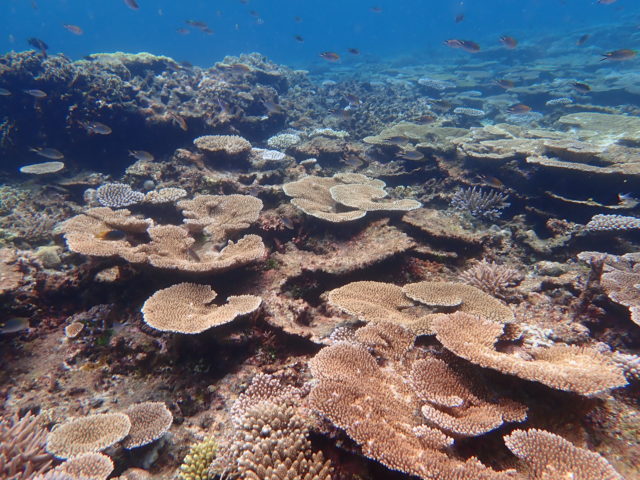
Yabiji stretches across the sea north of IkemajimaOne of the Largest Table Coral Reef Systems in the CountryIt is.
In 2013,Designated as a national scenic beauty spot and natural monumentAs a result, there are more than 100 reefs of various sizes.
According to the Agency for Cultural Affairs,Japan's largest table-shaped coral reef systemIt is significant as the first coral reef system to be designated as a Natural Monument (Source:Cultural Heritage Online)。
This is because the underwater coral reefs are revealed on the surface of the sea during low tide at high tide,Also known as "The Phantom Continent."It is also known as the "Diving and Snorkeling Spot," and is one of the best diving and snorkeling spots on Miyako Island.
The sight of colorful coral spreading across the crystal-clear waters is a unique attraction of Yaese.
The Origin of the Name "Yabiji"
Yaehigase" is written, "Yaehigase."kanji for "yabiji" (esp. used as a phonetic symbol, instead of "yabi-ji")It reads as.
Although it has been called “Yapishi” and other names depending on the region, the name was standardized in 1999 to “Yabiji,” which had been used on Ikemajima.
There are two theories regarding the origin of the name: one suggests it comes from the fact that it consists of “eight coral reefs,” and the other suggests it refers to “multiple coral reefs overlapping” (Source:Miyakojima City)。
Where is Yabiji?

Yabiji stretches out into the sea north of Ikema Island, which lies north of Miyako Island.
According to Miyakojima City,Approximately 16.8 km east to west and approximately 14.5 km north to southMore than 100 reefs of various sizes are scattered throughout this area (Source:Miyakojima City)。
Often referred to as “Japan’s Great Barrier Reef,” it features numerous dive sites where countless tropical fish swarm around colorful coral reefs.
as ifThe Dragon's Palace of Undersea ColorIt can be said to be a place like
How to Get to Yaese and How to Choose a Tour

Since Yaese is located offshore,It's common to go on a tour that takes you there by boat.It is.
Since the departure points, travel times, and age requirements vary by tour, be sure to check these details before making a reservation.
Here, we'll introduce the travel times by departure point, recommended tours, and the best seasons to visit.
Travel Times by Port of Departure

Tours to Yaese are,Many depart from the port on Ikemajima, and the boat ride is the shortest.It is.
According to the Miyako Island Tourism Association,It takes about 35 minutes by car from Miyako Airport to the Ikema Bridge.(Source:Miyako Island Tourism Association), and it takes about 20 minutes by boat from Ikeman Port to Yaese (Source:Miyako Island Tourism Association)。
There are also tours departing from Hirara on Irabu Island and Miyako Island, and the boarding time varies depending on the departure point.
| Port of Departure | Boat Schedule to Yaese | Recommended for |
| Ikemajima (Ikemajima Fishing Port, etc.) | About 15 to 30 minutes | People who are worried about getting seasick or who want to spend a long time enjoying the ocean |
| Irabu Island (Watariguchi Port, etc.) | About 40 minutes | People Staying on Irabu Island and Shimoji Island |
| Miyako Island, Hirara (including Turiba Marina, etc.) | Approx. 50 min. | People staying in the city center / People who want to take a private charter |
Depending on sea conditions on the day of the trip, the port of departure and destination may change, so be sure to check the meeting location and time in the instructions you receive after making your reservation.
3 Recommended Tours in Yaeyama

The snorkeling tour in Yaese is,About 3 to 5 hours; approximately 10,000 to 16,000 yen per personThere are many plans like this.
Many tours set an age limit of 60 or 65, and the requirements vary by tour.
Here, we’ll introduce three different tours of Yaese, each with a different departure point and time.
| tour | Fees (per person) | Port of Departure | the time required | Age |
| (i)Snorkeling at Yaeyama with an Experienced Guide | 12,000 yen | Ikema Island | About 3 hours | Ages 6 to 65 |
| (2)Small-Group, Leisurely Yaese Snorkeling Tour | 16,000 yen | Ikema Island | About 5 hours | Ages 6 to 65 |
| (iii)Yaese Snorkeling for Up to 30 People | Adults: 15,000 yen Children: 8,000 yen |
Irabu Island (Watari Port) | About 4 hours | Ages 6 to 60 |
*Prices and terms are subject to change, so please check the page for each plan before making a reservation.
① is a trip from Ikema Island to Yaese, which takes about 20 minutes,A Popular Plan with 148 ReviewsIt is.
The tour generally covers two spots, and you can rent snorkel gear and life jackets for free.
② is,Includes a homemade lunch prepared by the captainSo, this is an approximately 5-hour itinerary that takes you to 3 or 4 spots, including a lunch break.
Participation is limited to small groups of up to 12 people, and the program runs from March through October.
For option ③, meet at Watari Port on Irabu Island, andIt takes about 40 minutes by boat to get to Yaeyama IslandsHere is the plan for our trip.
Children ages 6 to 11 can participate at the child rate and receive drone footage and underwater footage as a gift.
There are also various other tours available in Yaeyama, such as private charters and introductory diving experiences.
On Miyako Island, for participants in diving and snorkeling,The “Beautiful Sea Cooperation Fee” of 500 yen per person per dayWe have been asked to cooperate with this effort, and the funds are being used for coral conservation and other initiatives (Source:Miyako Island Churaumi Liaison Council)。
Best Season and Recommended Times to Visit

If you're going to Yaese,Spring through summer, when the sea is often calm, is the best season.It is.
In winter, strong north winds often cause rough seas, so tours are frequently canceled.
| Time | The Sea Conditions | tour |
| Spring (March to May) | The north wind has died down, and there are more calm days. | ◎ More tours will be offered starting in March |
| Summer (June–August) | The water temperature is high, making it the most comfortable for swimming | ◎ Best season. Events may be canceled if a typhoon approaches. |
| Fall (September–October) | The water temperature is high, but typhoons can sometimes hit. | ○ Some tours end at the end of October |
| Winter (November–February) | The north wind is strong, and the sea tends to get rough. | △ Many cancellations |
The Miyako Island Tourism Association also,Tours of Yaese are not held during the winter months when the north wind blows.It states (Source:Miyako Island Tourism Association)。
If you'd like to go in the winter, check with the tour company about the event schedule before making your plans.
Preventing Seasickness and What to Bring

Since the time spent on the boat will be longer,If you're worried about getting seasick, take motion sickness medication in advance.That's reassuring.
Be careful, as not getting enough sleep the night before, drinking too much, being hungry, or overeating can all cause seasickness.
Snorkel gear is often available for rent on these tours, so all you need to bring is a swimsuit, a towel, sunscreen, and something to drink.
Recommended Activities in Yabiji

Known as one of Japan's largest table coral reef systems, Yabiji is a great spot for snorkeling and diving.
Why not take a swim in the crystal-clear waters of Yabiji?
Here are some recommended activities in Yabiji.
Yaebiji Snorkeling

Speaking of activities for beginners to enjoy Yaebiji (Yaebiji),snorkelingIt is.
There are also many coral reefs growing in the shallows, and at low tide, the coral reefs beneath the water surface emerge here and there above the water.
Sunlight shines on the coral in the shallow waters, andYou can enjoy the colorful corals in all their clarity.The following is a list of the most common problems with the "C" in the "C" column.
If you join a tour, they’ll provide snorkels and goggles, so you can enjoy the wonderful underwater world with almost nothing but the clothes on your back.

Yaebiji Diving

If you want to experience Yaese more deeply than you can with snorkeling, we recommend scuba diving.
If you are divingDive deeper than snorkelingSince you can do this, you can take your time observing the coral reefs.
If you want to explore terrain such as the backside of rocky outcrops or get a closer look at coral reefs, diving is definitely the way to go.

Because the currents are strong on the outer side of the coral reef, this area is recommended for experienced divers.
You might even encounter large migratory fish, andA Dive Site That's Attractive to DiversThere are many
Marine Life You Can Encounter at Yabiji

Yabiji is not only a coral reefIt is home to a wide variety of marine life.The following is a list of the most common problems with the "C" in the "C" column.
Here, we’ll introduce some of the creatures you might encounter at Yabiji.
sea turtle

When you come to Miyakojima, you want to see sea turtles!
Sea turtles can sometimes be spotted in Yabiji as well, butYou can also find them on the beaches around Miyako IslandThe following is a list of the most common problems with the "C" in the "C" column.
When you come to Miyako Island, swim with sea turtles!
Indian rhinoceros

"Mibai" is a general term used in Okinawa to refer to fish in the grouper family.
Among them, the reddish brown meibai is the most popular.One of the three most expensive fish in OkinawaIt is one of the fish in this category.
Since the Meibai's relatives live near coral reefs, they can sometimes be spotted in Yabiji as well.
Oriental butterflyfish (Chaetodon auripes, species found mo

The butterflyfish is a tropical fish about the size of the palm of your hand.
If you've ever seen tropical fish, chances are you've seen this one, too—Major fishIt can be said that
Fluttering through the coral reefs.Like a butterflyIt is said that this name comes from the fact that it looked like [...].
pearl-spot chromis (Chromis notata, species notata var. italica)

The damselfish family consists of small fish that swim in schools around coral reefs.
There are many varieties in vivid colors such as blue and yellow, andThe sight of them fluttering as they swim over the coralThey are a colorful presence in the waters of Yaese.
anemone fish

In the movieclownfish (Amphiprioninae spp., esp. the yellowtail clownfish, Amphiprion clarkii)I'm one of them.
With its beautiful orange color and white stripe, this fish is absolutely adorable as it occasionally peeks out from inside the anemone.
You're sure to find the sight of it swimming while swaying from side to side soothing.
giant trevally (Caranx ignobilis)

The longtail mackerel is a fish that grows particularly large among the mackerel family.
The origin of the name is,The sight of it swimming leisurely all by itself is like a samurai ronin.It is said that the name comes from its resemblance to [...].
It is often seen in slightly deeper waters, such as on the outer edges of coral reefs, and it’s a fish that’s always a pleasure to encounter while diving.
Recommended Spots in Yabiji

Yabiji has more than 100 reefs of various sizes, andEach has its own traditional nameis attached.
According to Miyakojima City, there are more than 140 place names in the local dialect that are derived from the characteristics of the terrain and fishing grounds (Source:Miyakojima City)。
Here, we’ll introduce some of the spots frequently visited on tours of Yabiji.
The tour company will decide which spot to visit based on the ocean conditions on the day of the tour.
do

Among the Yaeyama Islands, Du is...Large LeafIt is a spot known as...
It’s a true underwater paradise, home to colorful fish such as clownfish and damselfish.
chicken ginseng soup (Korean dish)

Compared to other points, Sasun...Coral spreads across shallow watersHere's the key point.
Even while snorkeling, you can see coral and tropical fish so close you feel like you could reach out and touch them (please refrain from touching the coral).
urabis

Yurabiji is a popular spot for those who want to see a wide variety of tropical fish.
It's popular not only for snorkeling but also as a diving spot.
SometimesEncountering a large school of fishYou might even find yourself overwhelmed by the sight before you.
IF

If is a somewhat unique spot within the Yaeyama Islands.
Instead of coral, there is a vast expanse of sandy seabed, and sunlight reflects off the seafloor,Beautiful Emerald BlueThe product produces a
kijak

Kijaka,A coral reef located near IkemajimaIt is.
A survey conducted by Okinawa Prefecture also identified this area as one of the locations where coral thrives.
This is a popular spot where you can see coral spreading across a wide area and fish swimming gracefully.
Rules for Protecting Yaeyama Hase

The coral reefs of Yaeyama are a precious natural resource that have developed over many years.
A council composed of fishing cooperatives and businesses on Miyako Island,Rules for Enjoying the Ocean While Protecting the Coral Reefs...is stipulated.
① Do not touch the coral or stand on it.
② Wear a wetsuit or life jacket
③ Use a coral-friendly sunscreen
④ Do not chase or feed animals
⑤ Don't use long fins in shallow water
In the past, there were events where visitors could go ashore at Yaese, but currently, tours do not allow visitors to go ashore there.
In 2022, the Ministry of the Environment also selected the coastal waters around Miyako Island, including Yaese, as a candidate site for designation as a new national park (Source:Ministry of the Environment)、The Ocean We All Want to Protect TogetherIt is.
5 Recommended Activities Besides Yabiji

Since you have to take a boat to Yabiji, some of you might be worried about getting seasick, right?
Here,Five recommended activities that can be enjoyed without getting on a boatto the following.
① Miyako Island All-Inclusive Tour (SUP × Snorkeling × Caving × Canoeing)

The tour is packed with popular activities in Miyako Island,Miyako Island Complete TourIt is.
With this one-day plan that lets you experience SUP, snorkeling, caving, and canoeing all in one day, even visitors with a short stay can fully enjoy Miyako Island.
The activity takes about 7 hours, and is suitable for ages 7 to 59.
(2) SUP/Canoeing on a spectacular beach

Miyako IslandTours where you can enjoy the crystal-clear, emerald-blue ocean on a stand-up paddleboard or in a canoeIt is.
Since participants receive instruction from an instructor before riding, even beginners can participate with confidence.
The activity takes about 2 hours, and the age range is 3 to 59 years old for SUP and 3 to 65 years old for canoeing.
(3) Sightseeing Photo Tour

A sightseeing photo tour of Irabu Island’s breathtaking scenery with a local guide is,Watariguchi Beach, Toridori Pond, 17ENDThe area is full of spectacular spots that will make you want to snap your shutter, such as the following.
Transportation is provided to hotels on Miyako Island and Kurima Island; the trip takes about 3 hours, and the tour is open to guests ages 2 to 75.
Sunset SUP/Canoe

This tour lets you leisurely enjoy the breathtaking sunset over Miyako Island—where the sea turns a deep crimson—while paddleboarding or canoeing.
We also provide photography services and any necessary equipment free of charge, soCome as you are—no need to bring anythingCan be done.
The tour takes about 1.5 hours.
5⑤Starry sky & jungle night tour

This is a night tour featuring stargazing on Miyako Island, where there is little artificial light, and a stroll through the subtropical jungle.
Together with the guide,Nocturnal creatures and a star-filled skyYou can observe it.
The activity takes about 2 hours, and is suitable for ages 3 to 65.
Frequently Asked Questions About Yabiji
In 1999, the name was standardized as “Yabiji,” which had been used on Ikemajima.
Since many tours depart from ports on islands such as Ikema Island, be sure to check the meeting place and time before making a reservation.
Since there are also health requirements, be sure to check the eligibility criteria for each tour before making a reservation.
In winter, the north winds are strong, and tours are often canceled during this time.
If you're unsure about your swimming ability, it's a good idea to consult with the tour company when you make your reservation.
If you'd like to see sea turtles, we also recommend the sea turtle snorkeling tour, which you can join from the beaches of Miyako Island.
in the end
We introduced the Yaebiji (Yaebiji) of Miyako Island.
Yabiji, one of Japan’s largest table coral reef systems, is home to a wide variety of fish and corals and holds many hidden charms.
When you visit Miyako Island, be sure to take a tour to Yabiji.
It's sure to be one of the best memories of your trip to Miyako Island.
This article was written by.
